Freighter Cruises: What It’s Like to Travel on a Cargo Ship
Freighter Cruises & Cargo Ship Tours: What It’s Really Like to Travel on a Container Ship
Last updated: 22 October 2026
A freighter cruise is a voyage as a paying passenger on a working cargo ship. There are no casinos, no shows and no crowds: just you, a handful of fellow travellers, a professional crew and the open ocean. If you have ever wondered what it is really like to live on a container ship for weeks, this guide covers everything from cabins and food to bridge visits, costs and the best routes for a first voyage.
What is a freighter cruise?
Most large container and cargo ships are built with a few spare cabins. Shipping lines sell these to members of the public, usually up to 12 passengers per ship, so the vessel can stay below the threshold that would class it as a passenger ship. You sail on the ship’s real commercial route, call at its working ports, and live alongside the officers and crew.
You may also see it called a cargo ship cruise, container ship cruise, passenger freighter or cargo ship tour. They all mean the same thing: you are a guest on a ship whose main job is moving cargo.
Freighter cruise vs cruise ship
Freighter cruise
Cruise ship
Passengers
Usually 12 or fewer
2,000–6,000+
Cost per day
Around US$90–150, meals included
Varies widely; add-ons are common
Itinerary
The ship’s commercial route; dates can shift
Fixed holiday itinerary
Port time
A few hours to a couple of days, in working container ports
Planned sightseeing stops
Entertainment
Books, the ocean, the bridge, conversation
Shows, bars, pools, organised activities
Dining
Set meal times with the officers
Many restaurants and buffets
Medical care
No doctor on board
Medical centre on board
Best for
Independent, flexible, curious travellers
Holidaymakers wanting comfort and activities
Passenger cabins sit in the accommodation block near the bridge, alongside the officers’ quarters.
Your cabin
Passenger cabins are usually on the upper decks of the accommodation block, near the officers. Typical features:
Outside cabin with a window or porthole; larger “owner’s” cabins often have a separate lounge
En-suite shower and toilet
Practical furnishings: a desk, wardrobe, fridge and often a sofa
Bedding and towels supplied and changed regularly by the steward
Power sockets. Bring a universal adaptor, because sockets vary by ship
The owner’s cabins sell first, so book early if you want the extra space.
Food on board
You eat three meals a day in the officers’ mess, cooked by the ship’s cook. The menu reflects the crew’s nationality, so expect anything from Filipino and Eastern European dishes to Italian pasta or French bread, depending on the ship. Meal times are fixed and early, often around 07:30, 12:00 and 17:30. Special diets can usually be handled with notice, so tell us when you book.
A typical day at sea
Time
What happens
07:30
Breakfast with the officers
Morning
Visit the bridge (with permission), walk the deck, read, watch for whales and dolphins
12:00
Lunch, the main meal on many ships
Afternoon
Gym, swimming pool if fitted, writing, photography, a nap
17:30
Dinner
Evening
Sunset on deck, films in the lounge, stargazing far from city lights
Once a week or so, everyone takes part in a safety drill, including passengers. On your first day the crew will brief you on lifeboats, alarms and areas that are off-limits.
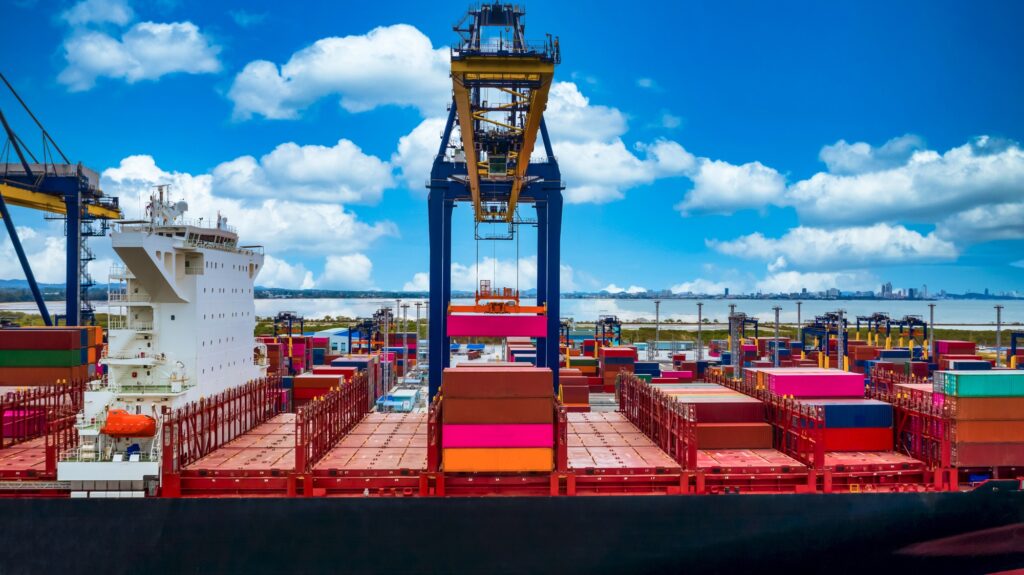
Port days: watch the cranes at work, or head ashore while the ship is loaded and unloaded.
Port days
Container ports are fast-moving industrial places. A ship might be alongside for six hours or two days, depending on cargo operations. When time allows, you can go ashore with your passport and the ship’s agent’s details. Always be back on board well before the posted departure time, because the ship will not wait.
What a freighter cruise costs
Fares are charged per person per day, usually around US$90–150. They include your cabin and all meals. A two-week voyage typically costs roughly US$1,300–2,100 per person, before insurance and extras. Budget too for:
Travel insurance that covers medical evacuation at sea and deviation
A medical certificate confirming you are fit to travel
Port taxes and the booking fee, where they are not included
Drinks and snacks from the ship’s slop chest (onboard shop)
Transfers and hotels, because sailing dates can move
Want to keep costs down? Read our guide to travelling by cargo ship for free and on a budget.
Who can travel?
Age. Upper limits commonly sit between 75 and 85. Minimum ages vary, and some ships do not accept young children.
Fitness. You must be able to manage steep internal stairs and the gangway in all weathers.
Health. There is no doctor on board. You need a medical certificate, plus enough of any regular medication for the whole voyage and a few spare days.
Flexibility. This is the single most important requirement. Departures can move by days, and port calls can change.
Popular freighter routes for a first voyage
Transatlantic: UK and northern Europe to the USA or Canada, about 9–14 days. A great first voyage. See our guide to taking a boat from the UK to the USA.
UK to Australia: London Gateway to Sydney, Melbourne, Adelaide and Fremantle via Suez, roughly 5–6 weeks. See our England to Australia guide.
Europe to Asia: long voyages via Suez to Singapore and China
Europe round trips: short coastal loops around northern Europe or the Mediterranean, ideal for testing whether freighter life suits you
West Africa and South America: for experienced travellers wanting truly off-the-beaten-track ports
What to pack
Layers and a waterproof jacket. It is windy on deck, even in the tropics.
Shoes with good grip. Leave the heels at home.
Motion-sickness remedies, even if you have never been seasick
Binoculars and a camera
An offline library: e-books, downloaded films and podcasts
Medication and paperwork: prescriptions, plus a printed copy of your insurance and medical certificate
A universal adaptor, and a small torch
Is a freighter cruise right for you?
You will love it if you enjoy solitude, reading, the sea and the idea of seeing how global trade really works. It probably isn’t for you if you need a fixed timetable, daily entertainment or medical facilities close at hand.
Frequently asked questions
Can you take a tour on a cargo ship?
Yes. You can book a passenger cabin on a working cargo ship for anything from a few days on a European coastal loop to several weeks on an ocean crossing.
How many passengers does a cargo ship take?
Usually 12 or fewer.
Is freighter travel safe?
Commercial ships run strict safety procedures, and passengers join regular drills. The main risk is the lack of a doctor on board, which is why lines require a medical certificate and specialist insurance.
Is there Wi-Fi?
Sometimes, as limited paid satellite access. Many travellers enjoy being offline.
Can I visit the bridge?
On most ships, yes, at the captain’s discretion.
How far in advance should I book?
6–12 months ahead for popular routes and the owner’s cabins.
Ready for the voyage of a lifetime?
Tell us where you would like to go and when, and we’ll find a ship with a cabin for you.
Passionate about slow trip travel and sea. Steve know most shipping route and procedure to discover our beautiful world from sea on a container ship. He have been at most trips from 7 days on cargo travel to 140 days on board.