How Much Does a Container Ship Cost? Prices of New and Used Cargo Ships
By Steve Joury / October 22, 2026
How much does a container ship cost? New-build and second-hand prices by size, from feeders to 24,000 TEU giants, plus...
Read More
Last updated: 22 October 2026
The fastest transatlantic crossing by a passenger liner is still the record set by the SS United States in 1952: 3 days, 10 hours and 40 minutes eastbound from New York to England. Today nobody races the Atlantic any more, but you can still cross by sea in about a week on an ocean liner or around 9 to 14 days on a cargo ship.
For more than a century, ocean liners competed for the Blue Riband, the unofficial title for the fastest crossing of the North Atlantic. Shipping lines from Britain, Germany, Italy, France and the United States built ever faster ships, and the record was front-page news.
| Ship | Famous for | Era |
|---|---|---|
| Mauretania | Held the record for about two decades | 1900s–1920s |
| Normandie | French liner that set records in the 1930s | 1930s |
| Queen Mary | British record holder of the late 1930s | 1930s |
| SS United States | Fastest liner crossing ever, still unbeaten | 1952 |

On her maiden voyage in July 1952, the SS United States crossed from New York to Bishop Rock, off the south-west tip of England, in 3 days, 10 hours and 40 minutes, averaging about 35.6 knots. No passenger liner in regular service has beaten it since.
| Way to cross | Typical time | Notes |
|---|---|---|
| Ocean liner (Queen Mary 2) | 7 nights | Southampton to New York, scheduled service |
| Cargo ship | About 9–14 days | Depends on route and port calls |
| Repositioning cruise | 10–16 nights | Often via the Azores or Caribbean |
| Sailing yacht | 2–4 weeks | Usually via the Canaries and Caribbean |
Modern ships sail more slowly than the record breakers because fuel costs and emissions matter more than speed. Cargo ships in particular often use “slow steaming” to save fuel.
The days at sea are the point. A slow crossing means no jet lag, because the clocks change an hour at a time; time to read and rest; and the experience of seeing the size of the ocean. Many travellers say the crossing becomes the highlight of their whole trip.
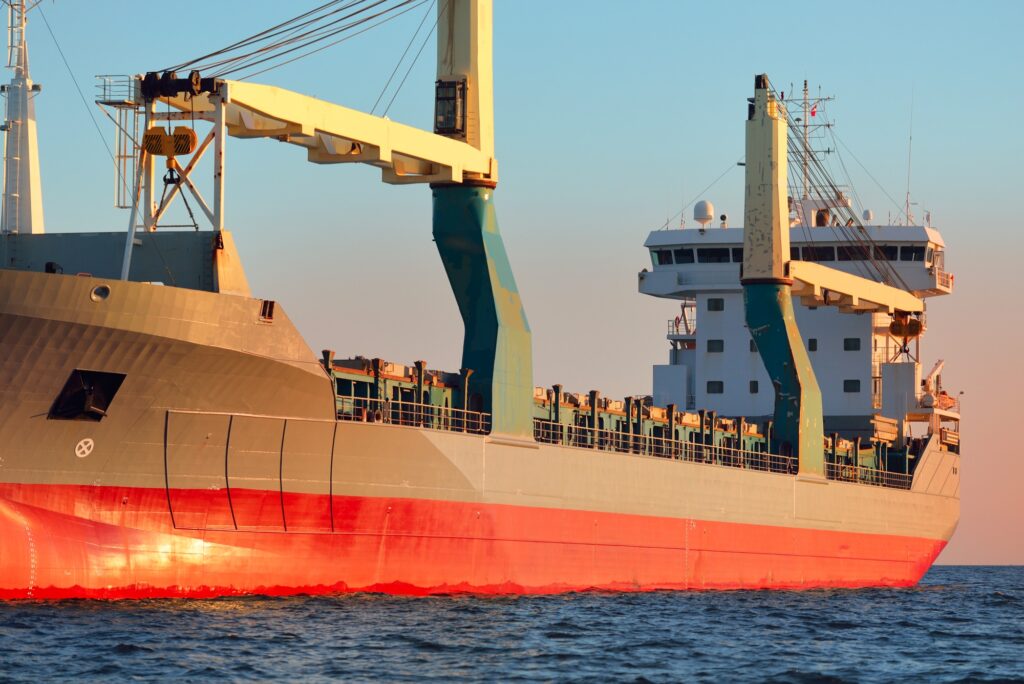
Container ships sail regularly between UK and northern European ports and the east coast of North America. With only a handful of passengers on board, you eat with the officers, visit the bridge and watch the North Atlantic roll past. Read our guide to taking a boat from the UK to the USA for routes, costs and visas.
The SS United States crossed from New York to Bishop Rock off England in 3 days, 10 hours and 40 minutes in July 1952.
The unofficial title for the passenger liner with the fastest crossing of the North Atlantic.
About 7 nights on the Queen Mary 2, or roughly 9–14 days on a cargo ship.
Fuel costs and emissions matter more than speed, so many ships sail at economical speeds.
Yes. Container ships carrying a few passengers sail between Europe and North America every week.
Ask us about cargo ship crossings between the UK and North America.
Get a transatlantic quote →