UK to Spain by Boat: Ferry Routes, Crossing Times and Tips
Last updated: 26 October 2026 · By Steve Joury, cargo trip advisor at CargoHolidays
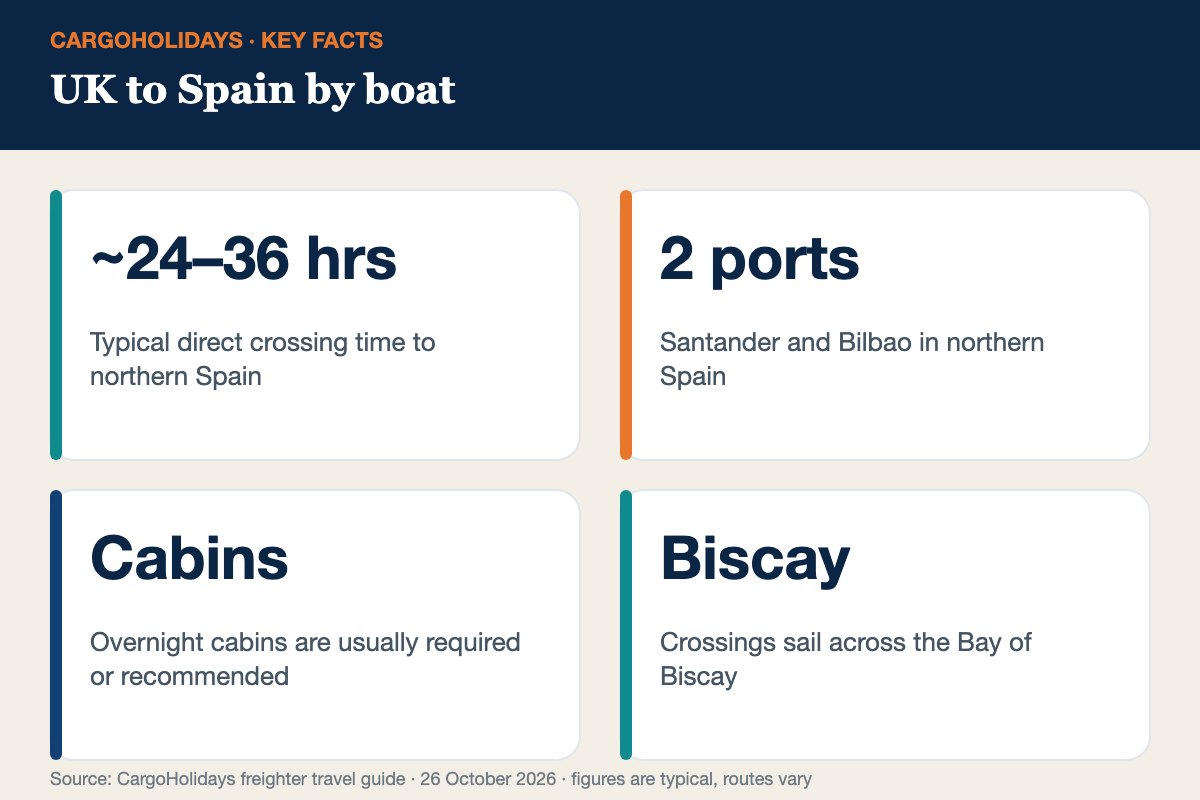
You can travel from the UK to Spain by boat on direct ferries from Portsmouth and Plymouth to Santander and Bilbao in northern Spain. Crossings take around a day or more, usually with an overnight cabin, and you can take your car. Here are the routes and how to plan.
Direct ferries link Portsmouth and Plymouth with Santander and Bilbao.
Crossings take roughly a day to a day and a half.
You can sail as a foot passenger or with a car or campervan.
The route crosses the Bay of Biscay, which can be rough.
Alternatively go by train via France, crossing the Channel first.
Direct ferries from the UK to Spain
The easiest way to get from the UK to Spain by boat is a direct cruise-ferry to northern Spain. Brittany Ferries runs routes from Portsmouth to Santander and Bilbao, and from Plymouth to Santander (seasonal patterns vary). The ships have cabins, restaurants and lounges, so the crossing feels like a mini-cruise.
Percorso
Typical crossing time
Note
Portsmouth – Santander
About 24–32 hours
Year-round on most schedules
Portsmouth – Bilbao
About 24–32 hours
Good for the Basque Country
Plymouth – Santander
About 20 hours
Seasonal/limited sailings
Timetables and durations change by season and ship, so always check the latest schedule.
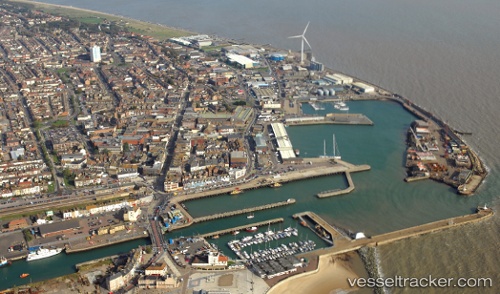
Ferries to northern Spain leave from the south coast of England.
Taking your car to Spain by ferry
Driving on is one of the main reasons people choose the ferry: you skip the long drive through France and arrive in Spain with your own car, perfect for touring or moving abroad. Campervans and motorhomes are welcome too. If you’re relocating, see our guides to moving to Spain from the UK e traslochi in Spagna.
Rail and ferry: Spain without a car
Foot passengers can take the train to Portsmouth, sail to Santander or Bilbao, and continue by Spanish rail or bus. Alternatively, cross the Channel by Eurostar or ferry and go all the way by train via Paris and the French-Spanish border to Barcelona or Madrid – possible in a long day with high-speed trains.
Ferries from the UK to Spain at a glance.
Crossing the Bay of Biscay
The Bay of Biscay is famous for its swell, especially in autumn and winter. Modern cruise-ferries are large and stable, but it can still be lively. Book a cabin, eat lightly and get fresh air – read mal di mare su una nave da carico for tips that apply to any ship. On calm days, look out for dolphins and whales; the Bay is one of Europe’s best whale-watching areas.
Tip: Stand on the outer decks as you cross the deep water off northern Spain – many passengers spot dolphins, and sometimes large whales.
Appassionato di viaggi lenti e di mare. Steve conosce la maggior parte delle rotte di navigazione e le procedure per scoprire il nostro bellissimo mondo dal mare su una nave container. Ha partecipato a molti viaggi, da 7 giorni di viaggio in cargo a 140 giorni a bordo.