Cargo Ship Piracy: Where It Happens and How Ships Stay Safe
Last updated: 26 October 2026 · By Steve Joury, cargo trip advisor at CargoHolidays
Cargo ship piracy still happens, but it’s concentrated in a few regions and modern ships use well-tested measures to deter and survive attacks. Many incidents are opportunistic theft at anchor rather than hijackings. Here’s the real picture.
Most incidents are theft or attempted boarding, often at anchor.
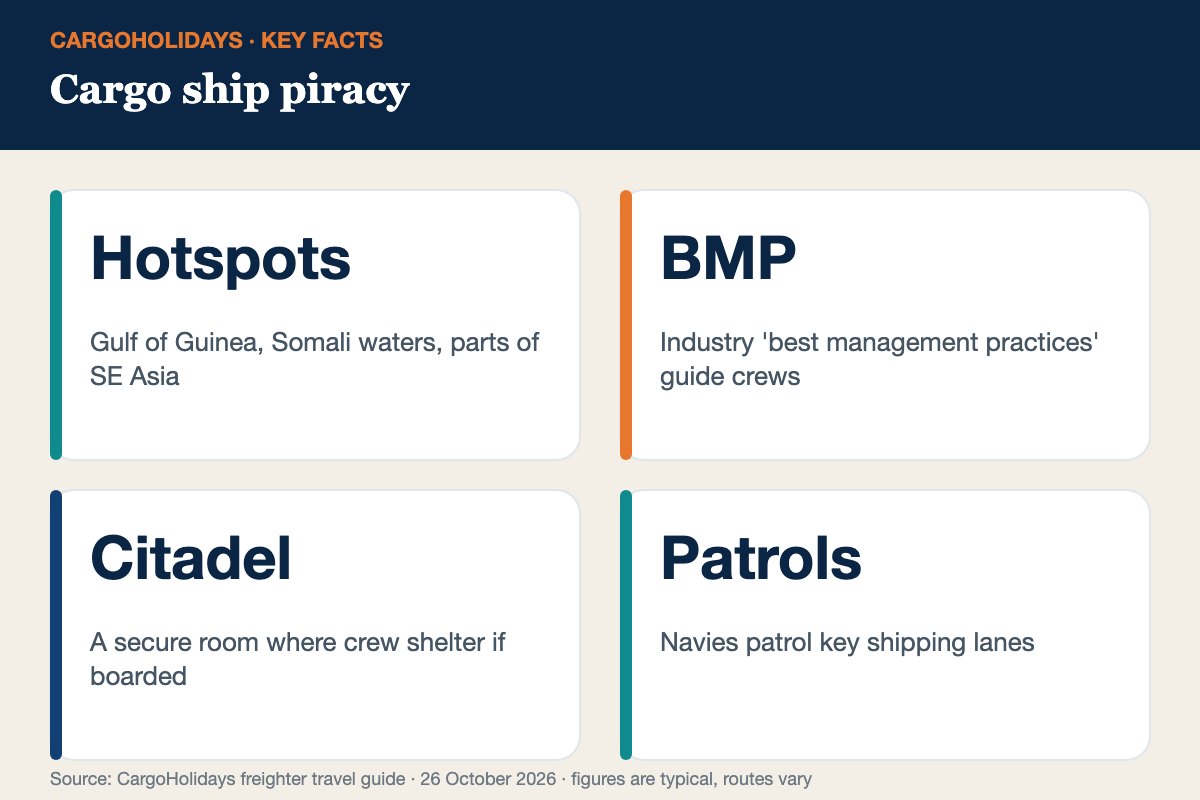
Hotspots have included the Gulf of Guinea, Somali waters and parts of Southeast Asia.
Ships follow industry best management practices in high-risk areas.
Crews can retreat to a secure citadel.
Passenger voyages generally avoid or reroute around high-risk areas.
Where does cargo ship piracy happen?
Reports of cargo ship piracy and armed robbery are collected by bodies such as the International Maritime Bureau’s Piracy Reporting Centre. Activity shifts over time, but the main areas have included:
Region
Typical pattern
Gulf of Guinea (West Africa)
Boarding and kidnapping risk offshore
Gulf of Aden / Somali Basin
Historic hijackings; activity has re-emerged at times
Singapore Strait and nearby waters
Mostly petty theft from ships under way or at anchor
Some anchorages in South America and Asia
Opportunistic theft of stores and equipment
Always check current government travel advice for any region you’ll sail through.
Ships plan routes and precautions around high-risk areas.
How ships protect themselves
Route planning away from high-risk areas, or through protected transit corridors.
Extra lookouts and higher speed through risk zones.
Physical barriers: razor wire, locked doors and protected access points.
Citadel: a secure room with communications where the crew can shelter.
Reporting to naval coordination centres, which can send help.
Armed guards on some ships in certain regions, depending on law and company policy.
Naval patrols and international cooperation
International naval forces have patrolled key routes such as the Gulf of Aden for years, and regional cooperation in Southeast Asia shares information between countries. These efforts sharply reduced hijackings at their peak, though risks can return when attention fades.
Piracy and ship security at a glance.
What it means for freighter passengers
Shipping lines and agents monitor security closely. Passenger sailings may be rerouted, or lines may stop carrying passengers on certain routes during periods of higher risk. As a passenger you’ll join security drills and follow the crew’s instructions. Read Voyager à bord d'un cargo, est-ce sans danger ? for the wider picture.
Tip: If your route passes a security area, the captain will brief passengers. Take it seriously, follow instructions, and you’ll be part of a well-practised routine.
Passionné par le voyage lent et la mer. Steve connaît la plupart des routes maritimes et des procédures pour découvrir notre beau monde depuis la mer sur un porte-conteneurs. Il a participé à la plupart des voyages, de 7 jours en cargo à 140 jours à bord.