Last updated: 26 October 2026 · By Steve Joury, cargo trip advisor at CargoHolidays
Only a tiny fraction of shipping containers are lost at sea each year – industry surveys suggest losses usually run from a few hundred to a few thousand boxes a year, out of hundreds of millions shipped. But when they go, it makes headlines. Here’s why containers fall overboard and what happens next.
Losses are a tiny share of the containers shipped each year.
Most losses come from a few major incidents in severe weather.
Causes include heavy seas, parametric rolling, mis-declared weights and lashing failures.
Lost containers can float for a while and are a hazard to small boats.
Industry surveys by the World Shipping Council track losses.
How many containers are lost at sea?
Estimates of containers lost at sea vary year to year because a single bad incident can lose hundreds or even thousands of boxes. Industry surveys, such as those published by the World Shipping Council, have reported long-term averages in the low thousands per year, with recent years lower. Compared with the hundreds of millions of container movements each year, that’s a tiny percentage – but every lost box is a problem.
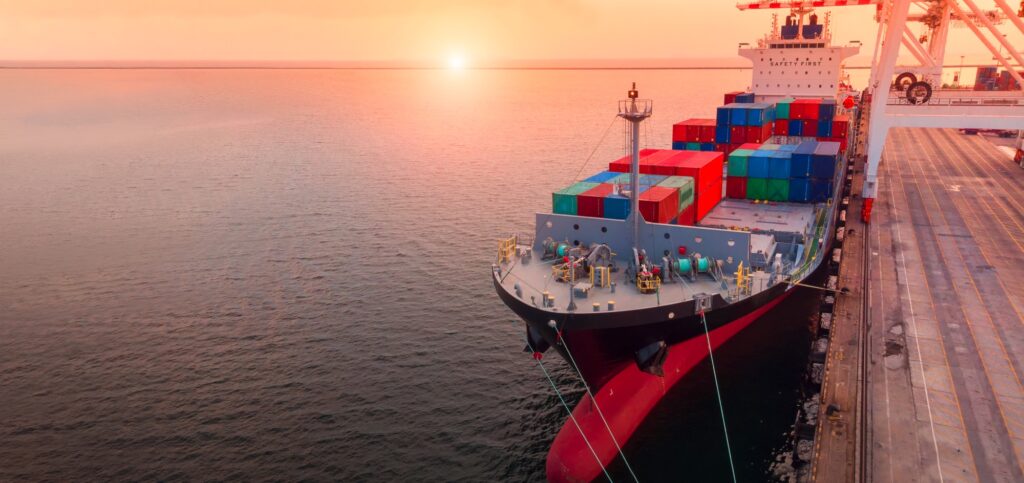
Containers are locked and lashed in stacks before every voyage.
Why containers fall overboard
Severe weather: huge waves and violent rolling put enormous loads on stacks – see cargo ships in storms.
Parametric rolling: a dangerous resonance in certain head or following seas that makes ships roll heavily.
Lashing failures: worn or wrongly fitted twist-locks and lashing rods.
Stack collapse: one failure can bring down a whole row.
Famous container spills
In 1992 a container of bath toys was lost in the North Pacific, and thousands of plastic ducks and frogs drifted for years, helping oceanographers study currents. Other spills have scattered trainers, Lego pieces and household goods along coastlines. Larger losses in recent years led to new rules and research into safer stowage.
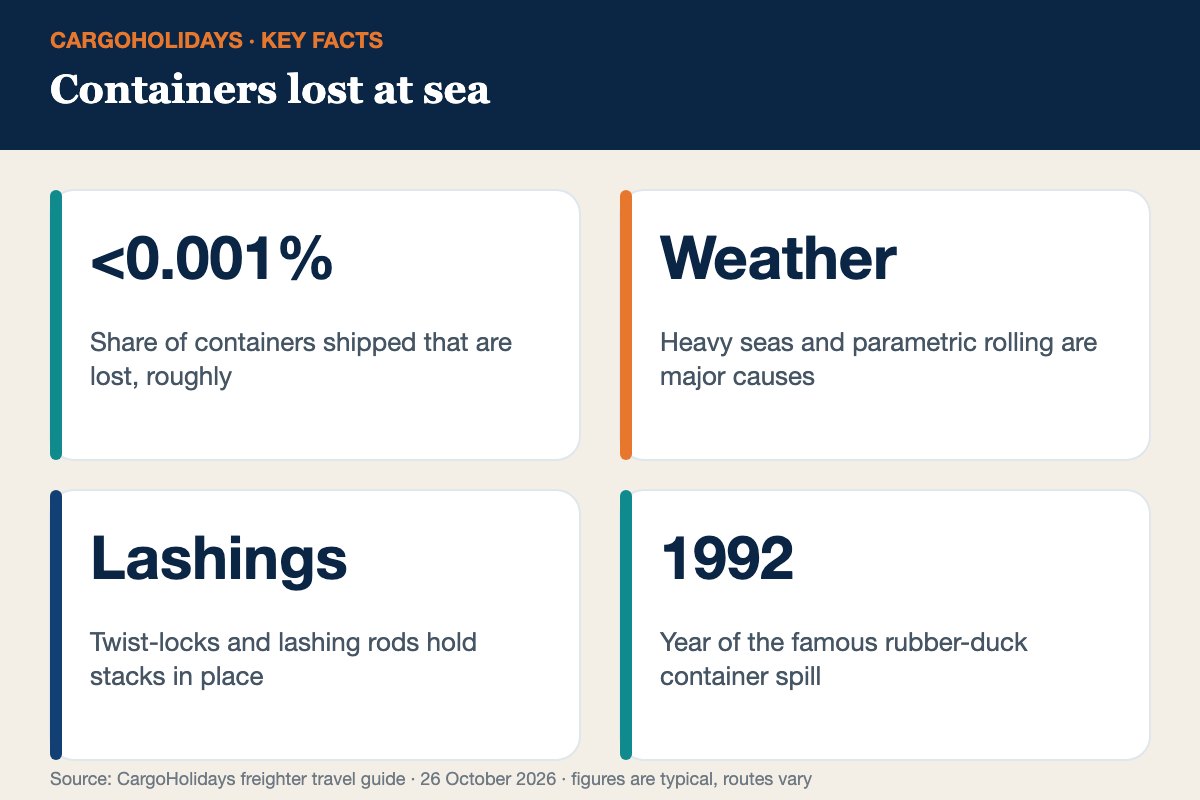
Containers overboard at a glance.
What happens to lost containers?
Some sink quickly; others float just below the surface for days or weeks, especially if they hold buoyant goods. Ships must report losses, and coastguards may issue warnings. Recovery is difficult and expensive, and only some containers are ever found.
How the industry prevents losses
Weighing containers before loading (verified gross mass rules).
Passionné par le voyage lent et la mer. Steve connaît la plupart des routes maritimes et des procédures pour découvrir notre beau monde depuis la mer sur un porte-conteneurs. Il a participé à la plupart des voyages, de 7 jours en cargo à 140 jours à bord.