Transpacific Freighter Travel: Cargo Ships Between the USA, Asia and Australia
Última actualización: 22 de octubre de 2026
The Pacific is the biggest ocean on Earth, and crossing it on a working cargo ship is one of the great slow-travel adventures. For American travellers, a freighter from the west coast is a way to reach Asia, Australia or New Zealand without flying. For Europeans, it can be the second half of a round-the-world voyage.
Main transpacific freighter routes
Ruta
Typical ports
Approximate sea time
US west coast → North Asia
Los Angeles/Long Beach, Oakland, Seattle → Busan, Shanghai, Yokohama
Unas 2 o 3 semanas
North Asia → US west coast
Shanghai, Ningbo, Busan → Los Angeles, Oakland
Unas 2 o 3 semanas
US west coast → Australia / NZ
Los Angeles, Oakland → Auckland, Sydney, Melbourne
About 3–4 weeks
US east coast → Australia via Panama
Savannah, New York → Panama → South Pacific → Australia
About 4–5 weeks
Round-the-world services
Europe → Panama → Pacific → Asia → Suez → Europe
About 3–4 months
Ships with passenger cabins on Pacific routes are fewer than on Atlantic routes, and availability changes from season to season. Flexible dates help a lot.
Pacific crossings are among the longest stretches without land on any freighter route.
What it is like crossing the Pacific
Long sea days: often a week or more without seeing land
The International Date Line: you gain or lose a whole day, a moment many crews mark
Weather: the North Pacific can be rough in winter, and the tropics bring warm, calmer seas
Wildlife: albatrosses, flying fish and sometimes whales
Stars: some of the darkest night skies you will ever see
Fares are usually charged per day, around US$90–150 per person, including cabin and meals. A three-week crossing typically costs about US$1,900–3,200 per person, plus booking fees, port taxes and specialist insurance.
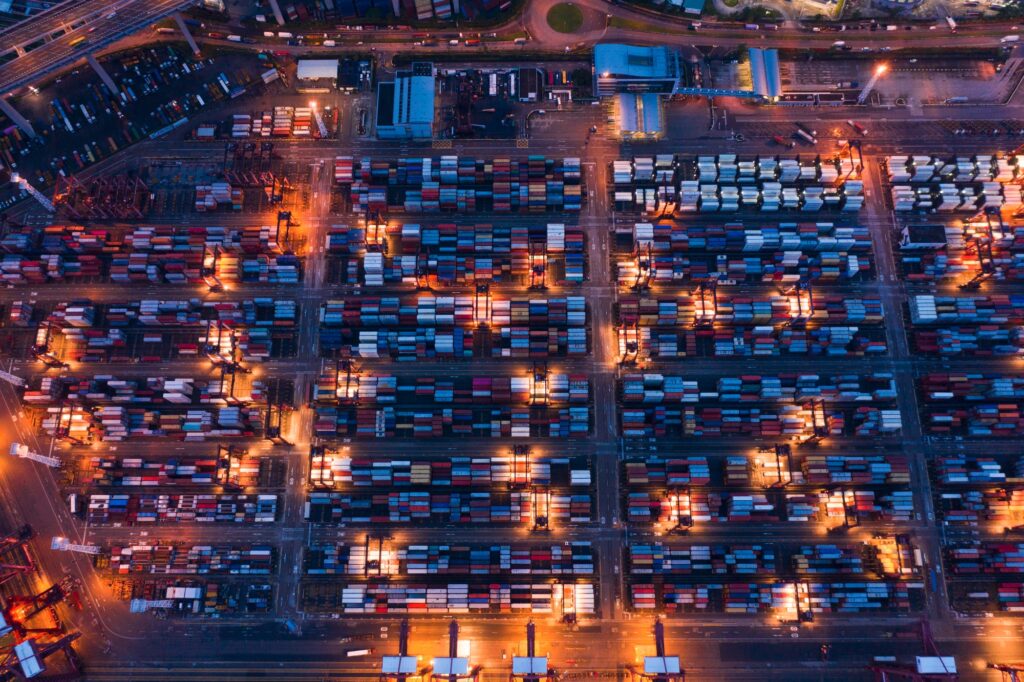
Asian hubs such as Hong Kong, Shanghai and Busan link with US west coast ports.
Paperwork and health
Visas: check entry rules for every port of call, not just your final destination. Australia and New Zealand require electronic authorities or visas for most visitors.
US departure: non-US citizens leaving by sea should keep evidence of their exit and travel dates.
Medical certificate and insurance covering evacuation at sea, which is particularly important given the long distances from land on Pacific routes
Medication: pack enough for the voyage plus a buffer for delays
Combining routes
Many travellers combine a Pacific crossing with an Atlantic one to circle the globe without flying. Start with a barco del Reino Unido a EE. UU., cross the country by train, then sail the Pacific to New Zealand or Australia. Or sail from England to Australia and return via the Pacific.
Preguntas frecuentes
Can you cross the Pacific on a cargo ship?
Yes. Some container ships between the US west coast, Asia, Australia and New Zealand carry a few paying passengers.
How long does it take a cargo ship to cross the Pacific?
Roughly 2–3 weeks between the US west coast and North Asia, and 3–4 weeks to Australia or New Zealand.
How much does freighter travel across the Pacific cost?
Usually US$90–150 per person per day, including meals.
Can I travel by freighter from the USA to Australia?
Yes, from west coast ports or from the east coast via the Panama Canal, subject to cabin availability.
Is the Pacific rough on a cargo ship?
The North Pacific can be rough in winter. Southern and tropical routes are usually calmer.
Cross the world’s biggest ocean
Tell us your departure port and dates and we’ll check Pacific freighter cabins.
Apasionado de los viajes lentos y del mar. Steve conoce la mayoría de las rutas marítimas y el procedimiento para descubrir nuestro hermoso mundo desde el mar en un barco de contenedores. Ha estado en la mayoría de los viajes desde 7 días de viaje de carga hasta 140 días a bordo.
Mudarse a Francia desde el Reino Unido tras el Brexit: visados de larga duración para 2026, tarjetas de residencia, asistencia sanitaria, gastos de mudanza, cómo llevarse el coche y...
Envíos en palés desde el Reino Unido a Europa y al resto del mundo: costes en 2026, dimensiones y pesos de los palés, plazos de tránsito, trámites aduaneros tras el Brexit...
Transferir dinero al extranjero desde el Reino Unido: cómo transferir el importe de la venta de una vivienda y los ahorros al emigrar, bancos frente a proveedores especializados...
¿En qué consiste el trabajo de un agente marítimo? Explicación de los agentes de fletamento y de compraventa, cómo obtienen sus comisiones, la Bolsa del Báltico y cómo...
Almacenamiento en contenedores de transporte en el Reino Unido: costes mensuales en 2026, tamaños de los contenedores, seguridad, qué se puede y qué no se puede almacenar, y alquiler...
¿Qué es un conocimiento de embarque? Cómo funciona, qué datos contiene, la diferencia entre el original, la liberación por télex, la carta de porte marítimo y el conocimiento de embarque interno...
Envío de un coche desde el Reino Unido a Nueva Zelanda en 2026: costes del transporte ro-ro frente a los del contenedor, tiempos de tránsito, limpieza de bioseguridad, GST...
Envío de un coche a Chipre desde el Reino Unido en 2026: costes del transporte ro-ro frente a los del contenedor, plazos de tránsito, derechos de importación, IVA y...
Mudarse a Portugal desde el Reino Unido en 2026: visados D7 y para nómadas digitales, NIF y residencia, gastos de mudanza, coches, asistencia sanitaria...