
How Much Does a Container Ship Cost? Prices of New and Used Cargo Ships
By Steve Joury / octobre 22, 2026
How much does a container ship cost? New-build and second-hand prices by size, from feeders to 24,000 TEU giants, plus...
Read More
Last updated: 22 October 2026
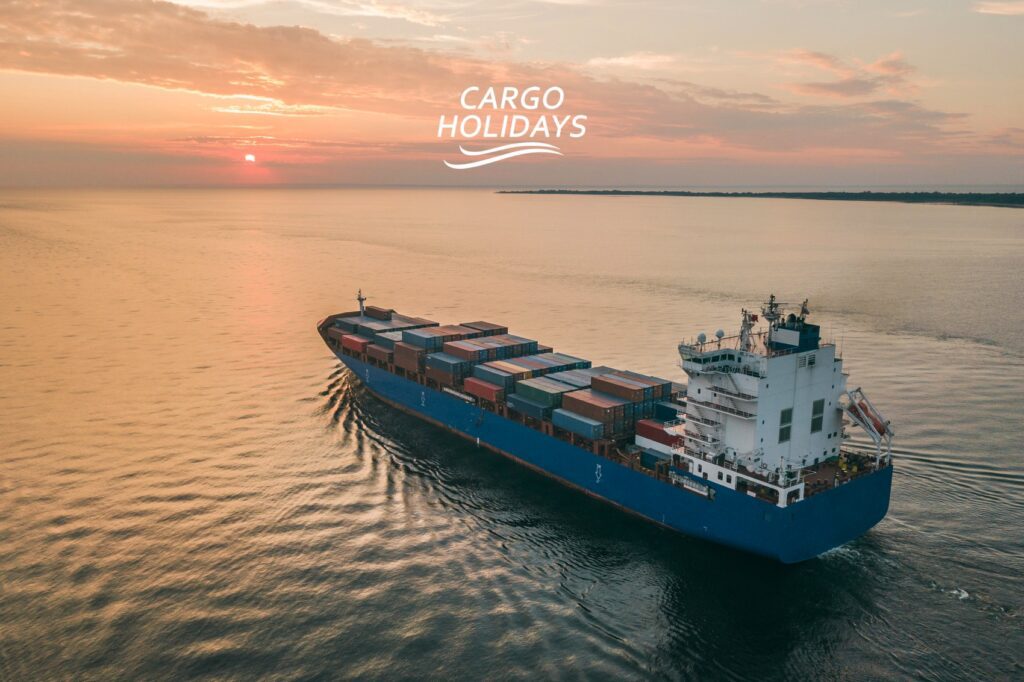
Most of the goods we buy cross an ocean on a container ship, and you can use the same system to send your own goods overseas. Whether you are a small business exporting stock, a seller shipping pallets, or a family moving belongings, sea freight is almost always the cheapest way to move heavy or bulky goods internationally from the UK.
| FCL (full container load) | LCL (less than container load) | |
|---|---|---|
| What it means | You rent a whole 20ft or 40ft container | You share a container with other shippers |
| Best for | More than about 13–15 cubic metres | Smaller shipments, from about 1 cubic metre |
| Cost basis | Flat rate per container | Per cubic metre or per tonne |
| Speed | Faster: no consolidation | Slower: waits for consolidation and devanning |
| Security | Sealed from origin to destination | More handling |
A 20ft container holds about 33 cubic metres, which is roughly 10 standard pallets. Read our shipping container sizes guide for the full dimensions.
| Destination | Typical port-to-port time |
|---|---|
| USA east coast | 10–14 days |
| Canada | 8–12 days |
| UAE (Jebel Ali) | 3–4 weeks |
| India | 3–5 weeks |
| Singapore | 4–5 weeks |
| China | 5–7 weeks |
| Afrique du Sud | 3–4 weeks |
| Australia | 5–7 weeks |
| New Zealand | 6–8 weeks |
Add time for collection, customs and delivery. Routes through the Red Sea and Suez Canal can be diverted around Africa, adding 1–2 weeks. See our sea freight transit times guide.
Container rates vary a lot with demand, fuel prices and global events. As well as the ocean freight, budget for:
Always ask whether a quote is “port to port” or “door to door”.
Incoterms decide who pays for what and where the risk transfers:
Look for membership of BIFA (the British International Freight Association), clear all-in quotes, tracking, and experience with your destination country. A good forwarder handles bookings, customs and insurance in one place.
Sea freight is usually the cheapest for anything heavy or bulky. LCL suits small loads; FCL is better value above about 13–15 cubic metres.
About 10–14 days port to port to the east coast, plus time for customs and delivery.
Businesses do. Private individuals sending personal effects usually do not, but check with your forwarder.
FCL means you book a whole container. LCL means you pay for your share of a container used by several shippers.
Sometimes. Some container ships carry a few passengers. Ask us about cabins on your route.
See the ports and ships behind global trade from a passenger cabin.
Request a cargo ship voyage quote →