12 Freighter Travel Myths, Debunked (2026)
By Steve Joury / November 4, 2026
Twelve common freighter travel myths checked against 2026 facts: cost, rules, piracy, cabins, internet, shore leave and carbon.
Read More
Last updated: 4 November 2026
Most freighter travel myths are wrong: it is not cheap, you cannot work your passage, and strict age and medical rules apply. But it is also safer, more comfortable and better connected than many people think. Here are 12 common myths, checked against 2026 facts.
It isn’t. A typical 2026 fare is around €90–€150 per person per day, including cabin and three meals. Add deviation insurance, port fees, visas and transfers, and a two-week crossing often costs as much as a mid-range cruise. See our cargo ship travel cost guide.
Almost never on a modern merchant ship. Crew must hold STCW certificates and be signed on through manning agencies, so insurers and flag states will not accept casual workers. If you want to earn at sea, read about real cargo ship jobs.
Freighter lines are strict. Many have an upper age limit, often between 75 and 85, and most ask over-65s for a doctor-signed fitness form. There is usually no doctor on board. Details are in our age limits and medical certificates guide.
| Myth | Reality (2026) | Why it matters |
|---|---|---|
| It’s cheap | c. €90–€150 per day, indicative | Budget like a cruise, not a backpacker trip |
| Work your passage | Crew need STCW certificates | Only paying passengers are accepted |
| No rules | Age limits, medical forms, insurance | Check eligibility before booking |
| Pirates everywhere | 137 incidents worldwide in 2025 (IMB) | Most were thefts at anchor, not hijackings |
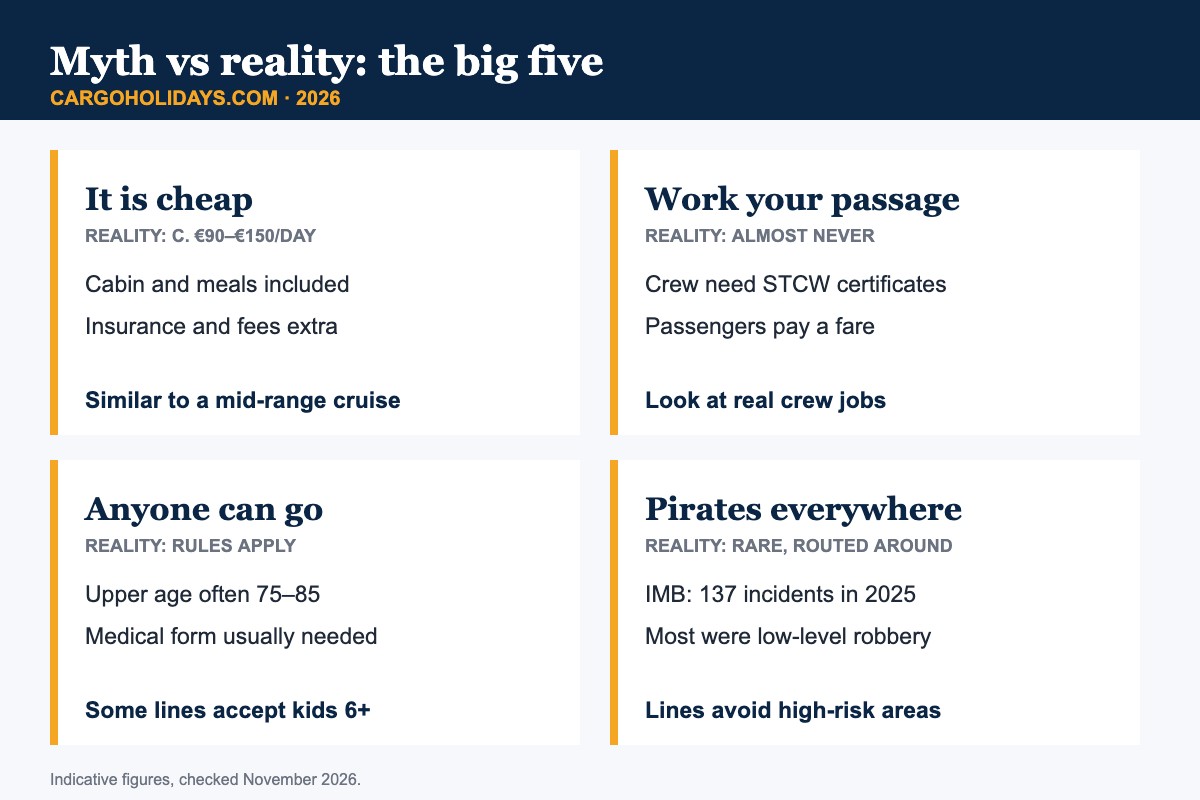
The ICC International Maritime Bureau recorded 137 piracy and armed robbery incidents in 2025, up from 116 in 2024. Some 80 were in the Singapore Straits, mostly thefts from ships under way. Hijackings were rare (four in 2025), and lines route around high-risk zones. More in our cargo ship piracy guide.
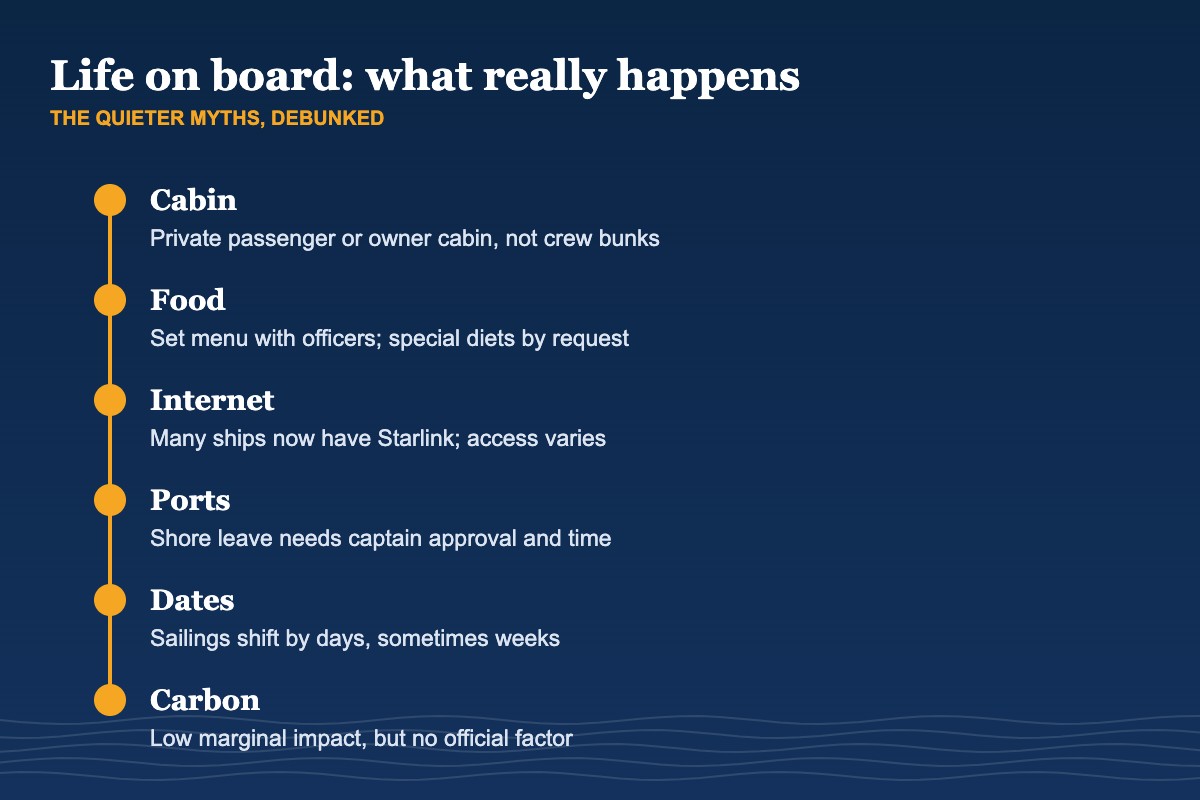
No. Merchant ships may carry no more than 12 passengers without being classed as passenger ships under SOLAS. Passengers get dedicated passenger or owner’s cabins, usually with a private shower and toilet, a window and a desk.
Meals are set and served at fixed times in the officers’ mess. There is no à la carte menu, but cooks can often handle vegetarian or allergy needs if you tell the line in advance. Snacks and drinks are usually available from the ship’s slop chest.
Many passengers say the opposite. There are bridge visits (when the captain allows), deck walks, a gym or pool on some ships, books, and long, quiet days for writing or reading. Bring your own entertainment and you’ll be fine.
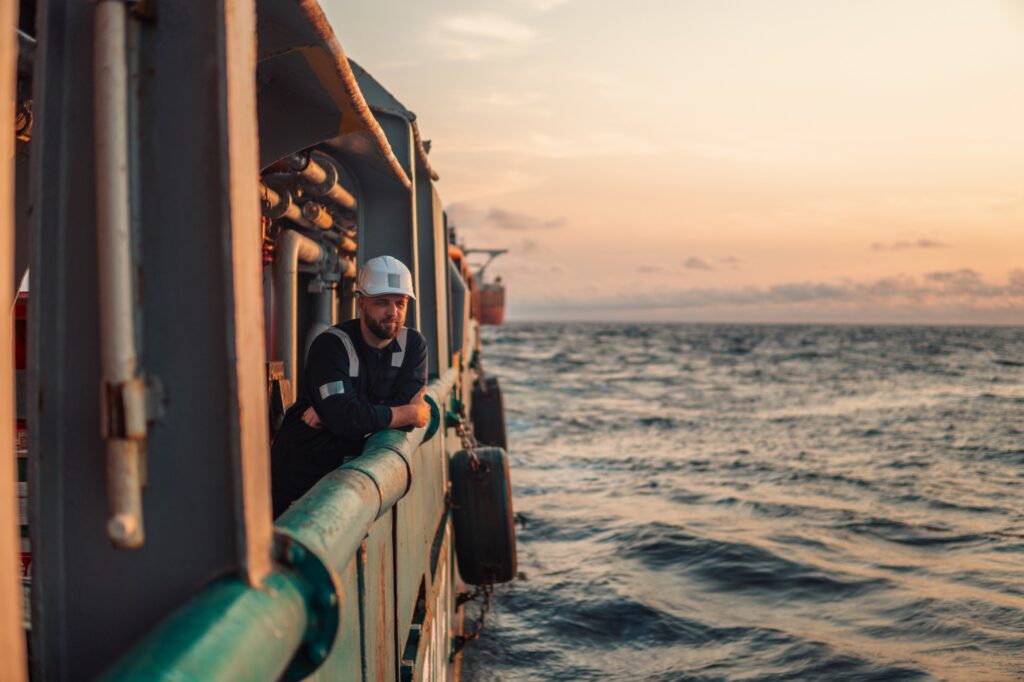
That is changing fast. Major carriers including Maersk and Hapag-Lloyd have rolled out Starlink satellite internet across their fleets since 2023. Passenger access, speed and price are still at the captain’s or line’s discretion, so ask before you book. See our Wi-Fi on cargo ships guide.
Not guaranteed. Container ships often stay just 8–48 hours, and you need the captain’s permission, the right visa and time to clear port security. Read our shore leave guide.
Cargo comes first. Departures and arrivals can move by days, sometimes weeks, because of weather, port congestion or cargo changes. Keep onward travel flexible and avoid non-refundable flights.
Retirees are common because trips are long, but remote workers, writers, couples and solo women all travel by freighter. Some lines accept children above a minimum age, often around six. See solo travel on a cargo ship.
Mostly true, with nuance. The ship sails for its cargo, so your marginal impact is small, but there is no official per-passenger factor. A London–New York return flight is about 1.3 t CO2e with radiative forcing. Our carbon footprint comparison explains the methods.
| Factor | Frachter | Kreuzfahrtschiff | Flying |
|---|---|---|---|
| Typical cost | c. €90–€150/day | Schwingt stark | Cheapest per trip |
| Passagiere | Up to 12 | Hundreds to thousands | Hundreds |
| Schedule | Flexible, can slip | Fixed itinerary | Fixed |
| Internet | Varies; Starlink on some | Usually paid Wi-Fi | Patchy |
| Age/medical rules | Strict | Light | Keine |
| Carbon per passenger | Low (marginal) | High | High on long-haul |
Roughly €90–€150 per person per day in 2026, including cabin and meals. Insurance, port fees and visas are extra.
Almost never. Crew need STCW certificates and are hired through agencies; passengers pay a fare.
Many lines set an upper limit, often 75–85, and ask older travellers for a medical certificate.
It is rare. The IMB recorded 137 incidents worldwide in 2025, mostly low-level robbery, and lines avoid high-risk areas.
Many now do. Maersk and Hapag-Lloyd have rolled out Starlink, but passenger access and cost vary by ship.
No more than 12. Above that, SOLAS treats the vessel as a passenger ship.
Tell us your route and dates and we’ll check which freighters take passengers.
Angebot für eine Reise anfordern →Sources: ICC International Maritime Bureau 2025 Piracy and Armed Robbery Report; SOLAS passenger-ship definition; Maersk and Hapag-Lloyd Starlink announcements; CargoHolidays route and pricing guides. Prices indicative. Checked November 2026.