Importing a Car From South Korea to the UK: Steps & Costs
By Steve Joury / noviembre 1, 2026
Importing a car from South Korea to the UK: NOVA, customs, the approval test and DVLA registration, in the order...
Read More
Última actualización: 23 de octubre de 2026
Most container ships today cruise at about 14 to 20 knots, roughly 16 to 23 miles per hour. They’re capable of more, but fuel costs and emissions rules mean most ships sail slower than their designers intended. Here’s how fast container ships go, and why.
Container ship speed at a glance| Measure | Typical speed |
|---|---|
| Typical service speed today | 14–20 knots (about 26–37 km/h, 16–23 mph) |
| Design speed of many large ships | 22–25 knots |
| Slow steaming | About 12–18 knots |
| Top speed of the fastest container ships | Around 25+ knots |
What is a knot? One knot is one nautical mile per hour, about 1.15 mph or 1.85 km/h.
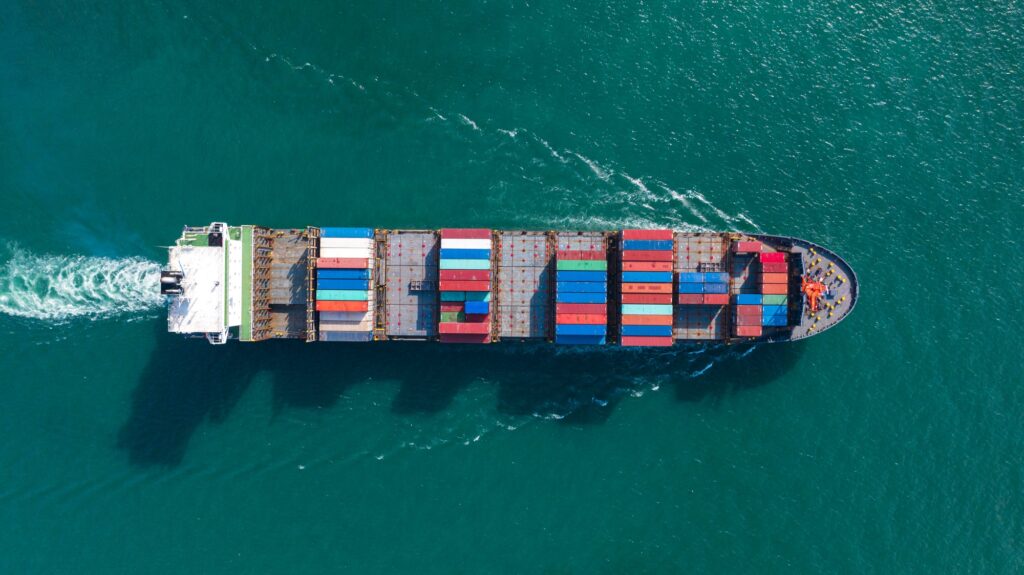
Since the late 2000s, many shipping lines have adopted navegación a baja velocidad, reducing speed to save fuel. Fuel use rises steeply with speed, so a small reduction makes a big difference. Read how much fuel a container ship uses.
International rules on ships’ carbon intensity encourage lines to sail slower and use more efficient ships.
Lines often adjust speed to arrive on time for their slot at the next port.
| Tipo de buque | Typical service speed |
|---|---|
| Buque portacontenedores | 14–20 knots |
| Buque granelero | 12–15 knots. See what is a bulk carrier. |
| Oil tanker | 12–15 knots |
| Ro-ro and car carrier | 15–20 knots. See what is a ro-ro ship. |
| Cruise ship | 18–22 knots |
| Fast ferry | 30–40 knots |
| Ruta | Tiempo habitual |
|---|---|
| UK to the US East Coast | About 9–14 days. See crossing the Atlantic. |
| Europe to Singapore via Suez | Entre 3 y 4 semanas aproximadamente |
| Europe to China via the Cape | About 6 weeks |
| Europe to Australia | About 5–7 weeks |
At sea, 18 knots feels calm and steady. A huge container ship moves through the water smoothly, and the main sensation is the gentle vibration of the engine. You’ll notice speed changes when the ship slows to pick up a pilot near port.
Learn more: how big is a container ship, how many containers fit on a ship y Cómo seguir el recorrido de un barco.
Most cruise at about 14–20 knots today, roughly 16–23 mph.
Many large ships are designed for 22–25 knots, but rarely sail that fast.
Sailing below design speed to save fuel and reduce emissions.
One nautical mile per hour, about 1.15 mph or 1.85 km/h.
Usually not. Cruise ships often sail at 18–22 knots.
Ask us about travelling as a passenger on a container ship.
Solicita un presupuesto para tu viaje →