Was ist ein Frachtbrief? Arten, Beispiele und Funktionsweise in der Schifffahrt
Last updated: 22 October 2026
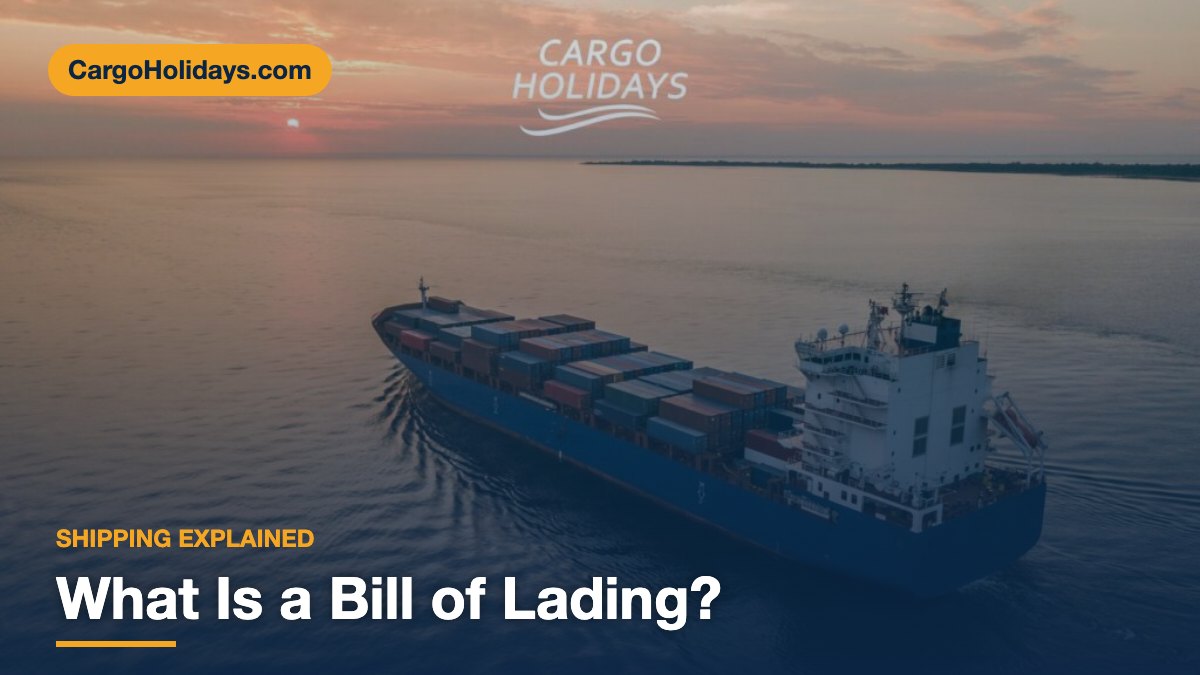
The bill of lading (B/L) is the most important document in ocean shipping. Whether you are exporting goods, importing stock or shipping household belongings, your bill of lading controls who can collect the cargo at the other end. Here is what it is, how it works and the main types you will come across.
What is a bill of lading?
A bill of lading is a document issued by a carrier (the shipping line) or its agent. It has three functions:
Receipt for the goods: it confirms that the carrier has received the cargo, usually noting the quantity and apparent condition
Evidence of the contract of carriage: it sets out the terms on which the goods are carried
Document of title: for negotiable bills, whoever holds the original can claim the goods at destination
A bill of lading is issued once the carrier receives or loads the cargo.
What’s on a bill of lading?
Shipper, consignee and notify party
Vessel name and voyage number
Port of loading and port of discharge
Container and seal numbers
Description of goods, number of packages, weight and volume
Freight terms: prepaid or collect
Number of originals issued, usually three
Date of shipment and place of issue
Main types of bill of lading
Type
What it means
When it is used
Original (negotiable) B/L
Paper originals; the holder can claim the goods
Letters of credit, goods sold in transit
Straight B/L
Named consignee only; not transferable
Simple sales between known parties
Telex release
Originals surrendered at origin; cargo released electronically
Speeds up release when paper would arrive late
Sea waybill
Not a document of title; goods released to the named consignee
Trusted partners, intra-company moves, removals
House B/L (HBL)
Issued by a freight forwarder to the shipper
Consolidated and forwarder shipments
Master B/L (MBL)
Issued by the shipping line to the forwarder
Behind every house B/L
Clean vs claused
Clean: no damage noted. Claused: defects noted
A claused B/L can be rejected by banks
Electronic B/L (eBL)
A digital document of title
Growing in use across the industry
An original bill of lading can transfer ownership of goods while they are at sea.
How a bill of lading works, step by step
The exporter books freight and delivers the cargo to the port or depot.
The carrier loads the container and issues the B/L to the shipper or forwarder.
If the buyer is paying by letter of credit, the originals go through the banks.
The buyer receives the originals (or a telex release is issued).
At destination, the consignee presents the B/L (or the release is confirmed), pays local charges and collects the goods.
Common problems
Late originals: the ship arrives before the paperwork, causing storage charges. A telex release or sea waybill avoids this.
Errors in names or descriptions, which can delay customs clearance
Lost originals: expensive and slow to resolve, often needing a bank guarantee
Bills of lading and personal moves
For household removals, your mover usually uses a sea waybill or telex release, so you do not handle paper originals. Keep the B/L number, because it is how you track the shipment. See how to track a ship and our sea freight from the UK guide.
Frequently asked questions
What is a bill of lading in simple terms?
A shipping document that acts as a receipt for cargo, evidence of the transport contract and, for negotiable bills, the title to the goods.
What is the difference between a bill of lading and a sea waybill?
A sea waybill is not a document of title. The goods are released to the named consignee without presenting an original.
What is a telex release?
The original bills are surrendered at origin and the carrier tells its destination office to release the cargo without paper originals.
Who issues the bill of lading?
The shipping line (master B/L) or a freight forwarder acting as carrier (house B/L).
What is a house bill of lading?
A bill issued by a freight forwarder to its customer, usually for consolidated shipments.
See the cargo you ship from the deck
Travel as a passenger on the container ships that carry the world’s trade.
Leidenschaftlich über langsame Reise und Meer. Steve kennt die meisten Schifffahrtsrouten und Verfahren, um unsere schöne Welt vom Meer aus auf einem Containerschiff zu entdecken. Er war auf den meisten Reisen von 7 Tagen auf Frachtfahrt bis zu 140 Tagen an Bord.